


This is when a few perennial clumps start acknowledging that they’ve been having too much fun.
There’s plenty of growth on the daylily but not nearly as many flower stalks compared to last year. The iris clump is mostly foliage and almost nothing else. A heuchera plant is doing something that I didn’t see before as it managed to climb onto a woody stem. And the hardy geranium that was supposed to “fill a gap” is eating the gap and the path and its poor neighbour.
This is when I think of dividing.
When done correctly, it gets rid of the old growth, allows the new shoots on the plant crown to breathe a little bit and, if done right, divides a big clump into three, four smaller plants.
But I’m not going to divide just because the calendar says it’s August.
A calendar August doesn’t always mean an August in your garden.
If the soil is dry a few inches below the surface and temperatures around 90°F, I keep the shovel in the shed. When a perennial is divided, it will have less roots to absorb water, and putting it through a heat wave afterwards isn’t really a nice thing to do.
Better wait for some cooler days, give it a good watering the night before and do it on a cloudy morning. In northern climates, this may be as early as August, but further south, this may come a little later.
When this happens, though, August is a fantastic month. The soil is still warm, many spring and summer bloomers finished flowering, and those pesky overgrown clumps are finally ready to be fixed.
Once all three conditions are met, these are the 10 perennials that I’ll consider dividing first in August.
1. Bearded Iris
There is one perennial on this list that is truly meant for August division – Bearded Iris.
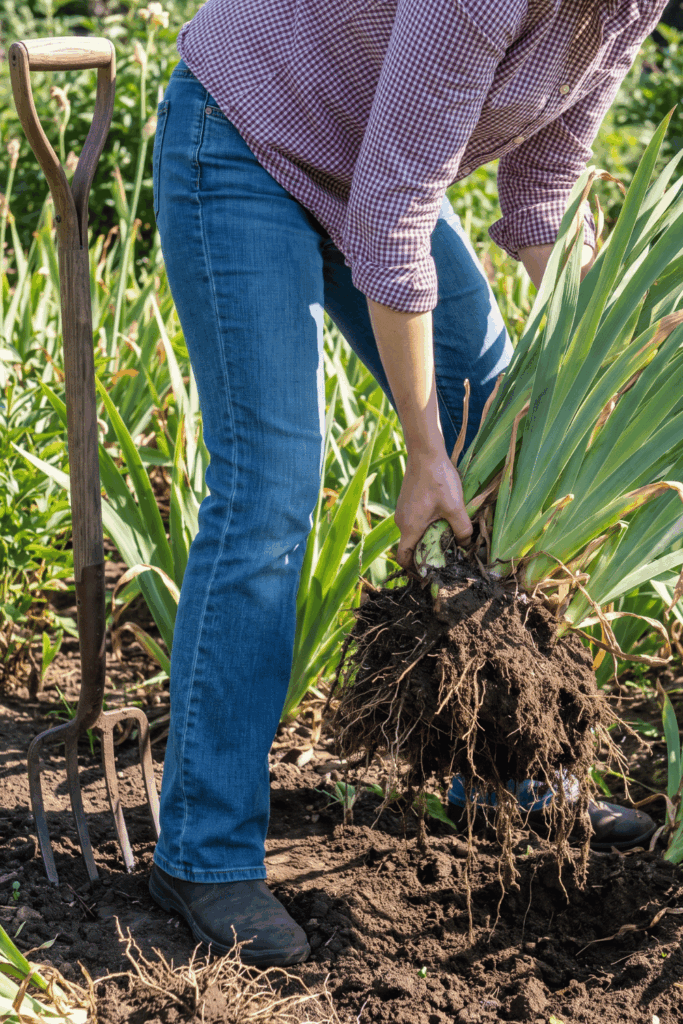
In three or four years, what was a neat-looking clump will be a mass of rhizomes crowded together. They will look lush on the outside, and yet flowering is gradually becoming weaker.
Once flowering is done for several weeks, take the whole clump out of the ground, wash away enough soil to expose the rhizomes and take a look inside.
Those are the pieces I am going to divide it into: healthy, plump, strong rhizomes with a lush fan of leaves and roots attached to it. The center piece can be woody, scarred and leafless; this part has done its job already.
Then cut it off where it joins the young rhizome. Any soft, rotten piece should be discarded.
Next step – cut the leaves to about 6 inches long, most likely forming a fan-like shape. It makes handling easier, but even more importantly, it significantly decreases the amount of leaf area that the plant will need to supply with water because of decreased root mass.
And now, while planting the newly formed divisions, comes the crucial difference between bearded iris and most other perennials mentioned here – do not bury the rhizome.
Put the roots down into the soil and keep the upper part of the rhizome exposed.
Provide it with plenty of sun, good drainage and enough space that it will not overcrowd itself again until next year.
Simple, yet this is what can make the difference between a clump that has leaves only and a clump with flowers.
2. Primroses

Primroses require a gentler approach.
The older specimens slowly transform themselves into small colonies of crowns that grow in a tight cluster, and once they are lifted, the clump itself tends to suggest how to divide it.
The best time for division is just after flowering, while summer division works best in cool conditions and in soil that remains fairly moist. For a hot, dry August climate, it is useless to force the issue.
Use a hand fork to lift the entire clump and remove it from the ground with as much root as possible. Once a bit of soil is stripped off, the task is better left to hands, not spades. Individual crowns will have obvious joints which can be easily teased apart.
That is the easiest way of deciding what is worth taking: one good crown with some roots is a plant. A rosette that comes away without any root at all is likely to take much less willingly.
When replanting, the crown should stay on the ground level while the roots go deep into moist and humus-enriched soil. Primroses are shallow-rooted, so aftercare will matter in this case more than the heroic excavation of the ground. It is better to divide five and keep them well watered rather than making twenty and spending the whole of August trying to prevent them from drying up.
3. Oriental Poppy (Papaver orientale)

August division of Oriental poppies is quite simple because their foliage dies down after flowering, which is a very evident sign of dormancy. This is exactly the point when I choose to divide them, not disturbing a plant in the middle of the growing season. It usually occurs in mid to late August, but some may prefer early September.
Firstly, note the exact location before it becomes absolutely impossible to spot a poppy among other plants, you would be amazed how fast it disappears. Carefully dig up the plant and try to keep its fleshy roots intact because Oriental poppies do not tolerate too much disturbance. It is a large clump that does not need chopping into small pieces.
Divide substantial portions of the plant with a healthy bud or growing shoot and plant them immediately in a sunny location with good drainage, leaving the same depth as before. I prefer to dig holes first as the less time those roots will dry out, the better.
Do not be alarmed if divisions disappear in the first days of planting as it is typical for Oriental poppies to undergo a summer dormancy period, which means that new shoots will appear once the plant enters the new growing period.
4. Astilbe
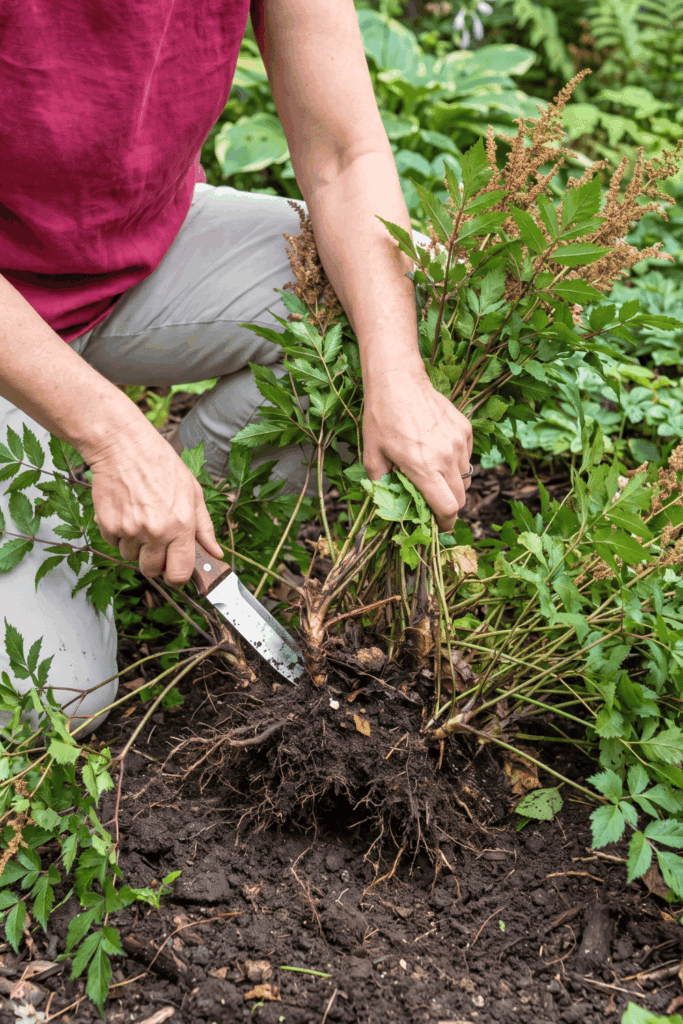
Unlike Oriental poppies, Astilbe is divided during the August without waiting for summer dormancy. Instead, I prefer to notice a plant with a dense and vigorous growth, weakening in the center or producing less flowers than usual. This is an indication that vigorous plants require division after about 4 years of growing and the best moment is late summer after flowering and when weather is getting warmer.
Before lifting a plant it is crucial to water it because this perennial does not tolerate dry roots and prefers moist soil. Once it is done, separate smaller crowns or cut through the large and dense clump using a spade.
Keep healthy shoots with several buds and well-developed root system. While planting use the same depth as before and pour plenty of water. It is also helpful to use 2-3 inches layer of mulch, but keep it away from the crown.
It is useful as Astilbe prefers moist and rich in organic matter soil conditions.
5. Daylilies (Hemerocallis)
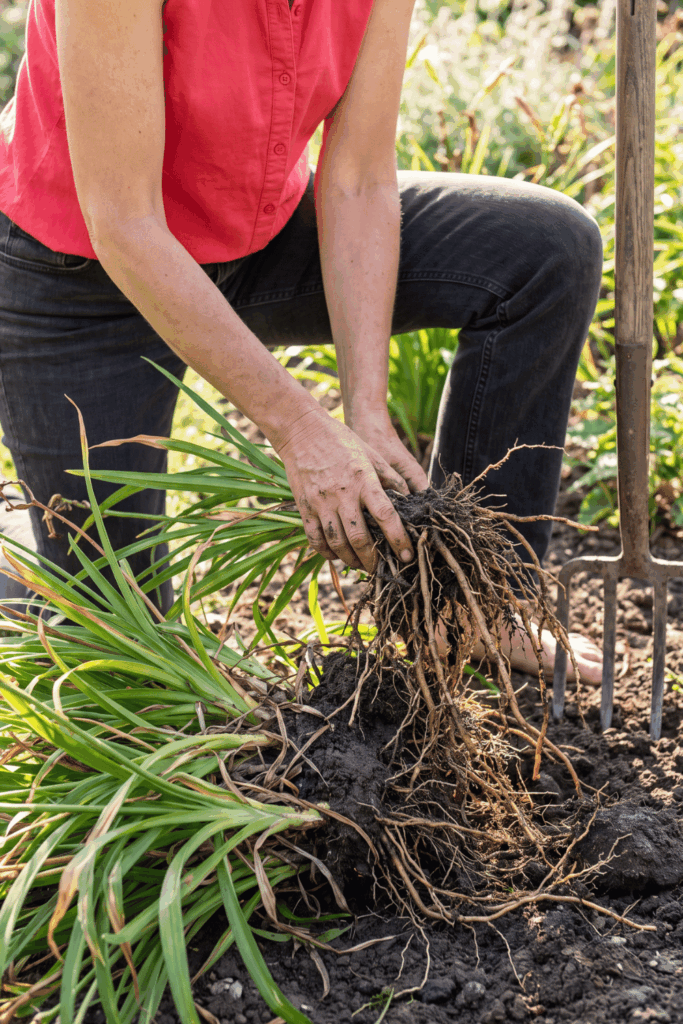
Daylilies are much more difficult because they may appear fine even when they’re terribly congested.
You may have a beautiful green crown, but it produces less flowers. After lifting, you understand why – under the soil is a tight ball of fleshy roots with fan on top of fan packed into the same spot.
When the flower period ends, dig around the crown and lift the whole clump if possible. Digging away some loose soil helps to distinguish between different fans, and young plants usually are divided rather easily. The older ones are more complicated and require a knife for cutting off tightly packed roots.
You don’t have to separate the plant into fans. It is enough just to take two or three healthy fans with enough root for creating a good-sized and fast-growing plant.
Then long foliage should be cut to about 5-6 inches. After that proceed with replanting, where you have to locate the crown – light colored spot where leaves are attached to roots – and place it 1 inch deep in the soil. It is better to remember this distance because daylilies do not need to disappear into 4 or 5 inches in the soil.
The last step is a good deep watering. Fleshy roots of daylilies accumulate reserves very well, but young separated divisions need to have a wet soil in order to grow their roots.
6. Garden Phlox (Phlox paniculata)

If mid to late August arrives and your garden phlox shows signs of aging, such as weakened centers, smaller flower heads, and more easily developed powdery mildew because of crowded foliage and lack of air flow, you will know it’s time for the plant to divide.
As soon as the first major flowering season starts to wind down, cut off all finished blooms, then carefully remove the plant using a digging fork. Try to retain most of the small fibrous roots when separating the crown.
Examine the crown closely now. The healthiest parts of it are usually located on the periphery, while the center of the aged clump is likely to be rather poor in this regard.
The crown is easy to cut up using a clean knife or a sharp spade. I try to leave three to five shoots along with a considerable amount of root on each section. Smaller divisions will grow well too, but larger chunks will settle better in the ground.
When planting the divisions, place the crowns 1 inch below the soil level and provide each with 18 inches of growing space. You need this additional space for improved air flow as the stems fill up next year.
Deeply water the plants after planting and make sure their roots don’t dry out over the coming weeks. If August weather is still hot, dividing the plant on a cloudy morning or after rainy weather will be much easier on the phlox.
7. Lilyturf (Liriope muscari)
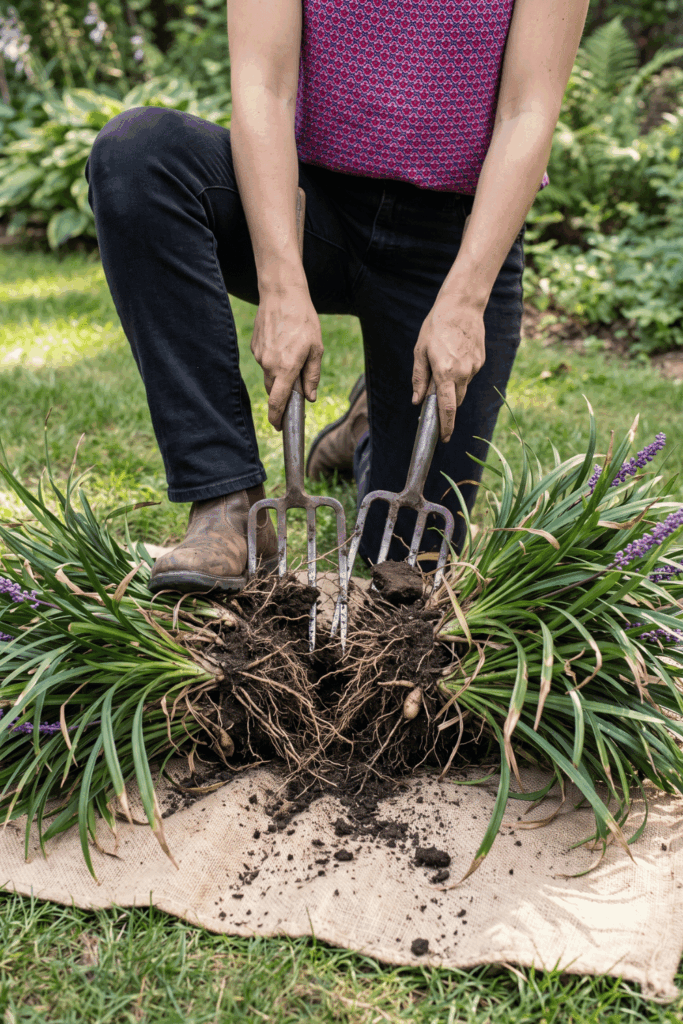
Lilyturf division is most often done for a good reason—there is an abundance of this wonderful plant and the desire to see it somewhere else.
The mature Liriope muscari forms a dense clump of stems from which the fleshy and tuberous roots extend, and the mature plants can be dug up and separated for propagation. Clemson states that the mature clumps are normally separated every three or four years for the same reason.
There is one reason I would hesitate about doing it at the start of August—it is the moment when liriope usually starts sending up the purple flower spikes. If yours blooms profusely, admire it first.
Afterwards, lift all or part of the clump and separate parts that include several leafy shoots and some chunky piece of the root system. This will give you larger and faster-growing divisions rather than a great number of individual shoots.
Replant with the base of the leaves at the same height it was before. Liriope is remarkably undemanding as far as conditions are concerned, but it still likes to grow in well-drained soil, not in the wet soil where its crown will sit.
Just to be sure, check the plant label before dividing your liriope: Liriope muscari is a clump-forming species, while Liriope spicata moves much more freely in the soil.
8. Bergenia
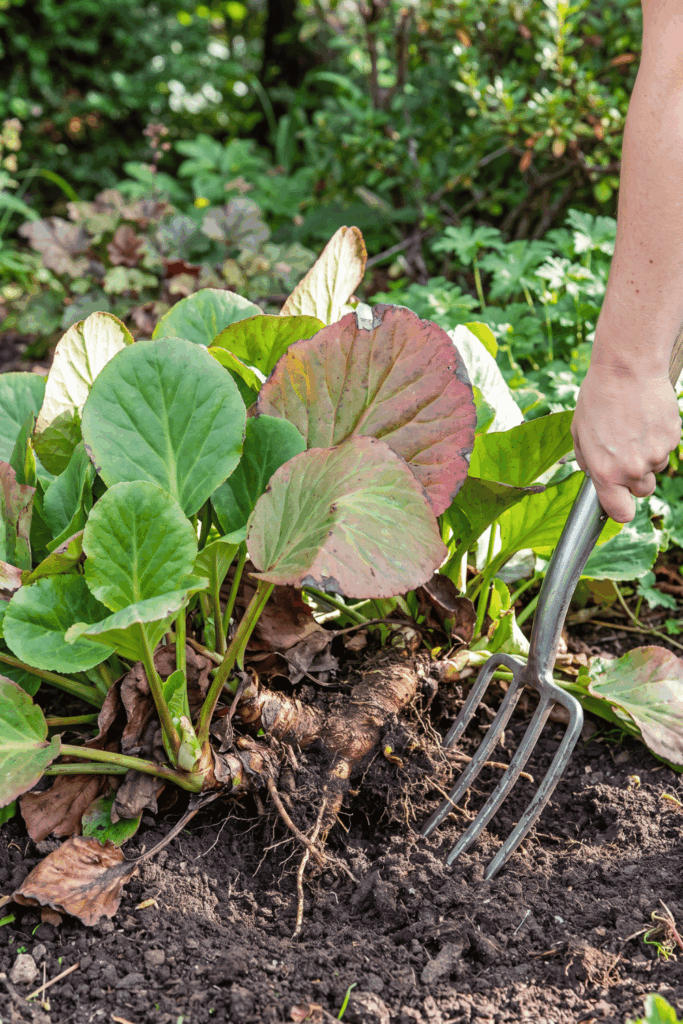
In the case of bergenia, the rhizome tells you exactly how it should be done.
The mature plant begins creeping outward by way of the thick, horizontal stems. Leaf rosettes become more distant from the original centre, forming a circle around it, before long, with a distinctly woody part left in the middle.
The woody core did its work.
The division of bergenia usually takes place either in autumn or right after the spring flowering, which means that I would try doing it only when it is late summer and cool and moist enough. Otherwise, I would wait for some more time.
Taking it out, I would cut out pieces of the plant growing along thick rhizomes with healthy leaf rosettes, firm rhizome and their roots. The woody core is no longer needed.
It is much more helpful than cutting out only four pieces out of the plant. You just take out young parts and leave the woody old parts.
Placing the plant back, I would put the rhizome shallow enough so that the roots were in the soil but the leaf rosette was still above the surface. Bergenia likes the soil that retains water but drains easily and tolerates both sunny and shady places, although the latter is preferred.
9. Lady’s Mantle (Alchemilla mollis)

Lady’s Mantle is not one that needs saving often.
On the contrary.
Give this perennial a couple of years, and you may find yourself with an abundant mound with seedlings sprouting near. The mound itself will benefit from division, too, although the best time will be either spring or fall. In August, I would recommend doing it after the flowers die down and the weather becomes warm enough for easy replanting.
First, cut off the dead flower stalks. Besides the fact that it helps reduce seedling numbers, there is quite a lot of bulk to remove and uncover the crown.
Then lift the clump up and divide it with the help of a spade into several sizable root clumps, each having a few growing points. There is no need to make them small – lady’s mantle multiplies without any effort and larger pieces will survive dry August weather much easier.
And all that is left to do is to plant the new parts back into the soil at the same depth and water them copiously.
It would also be helpful to examine all the divisions before planting them in the soil because there have been cases when I tried to propagate self-seeding perennials just to notice that they had more seedlings than required.
10. Heuchera
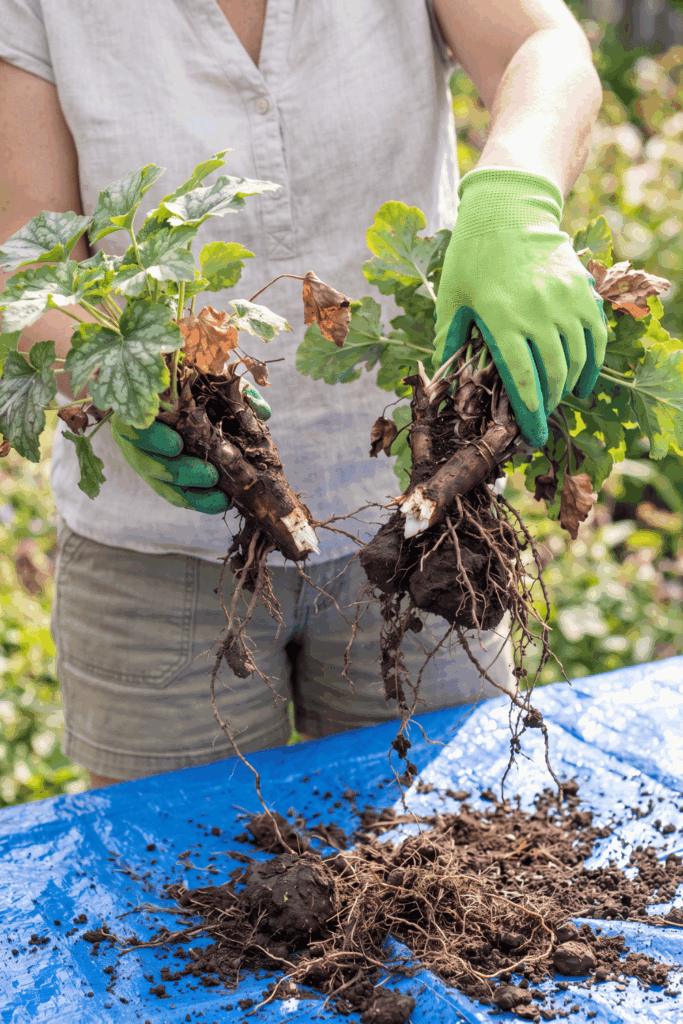
Heucheras get old in a pretty peculiar way. Unlike many plants that simply produce an enormous dense clump, the crown begins to rise, the woody stem becomes apparent, and the new growth appears only on the outside of the plant, which eventually makes the whole thing look like it is getting up from the soil.
That’s when the division becomes necessary.
Lift your plant and carefully remove soil in order to make the woody center visible. Outside of that, you should see some young crowns that have already developed roots. Divide them from the woody part.
If you hold a beautiful rosette without any roots below it, you make a cutting, not a division, which might grow too, but it will require a lot of care.
Plant the rooted crowns back with the crown placed on the soil level.
And if it’s still hot in August, I protect the divided heucheras from direct afternoon sunlight in order to prevent their roots from baking right after being divided. Just for a couple of weeks.

Written By
Amber Noyes
Amber Noyes was born and raised in a suburban California town, San Mateo. She holds a master’s degree in horticulture from the University of California as well as a BS in Biology from the University of San Francisco. With experience working on an organic farm, water conservation research, farmers’ markets, and plant nursery, she understands what makes plants thrive and how we can better understand the connection between microclimate and plant health. When she’s not on the land, Amber loves informing people of new ideas/things related to gardening, especially organic gardening, houseplants, and growing plants in a small space.