


Now that your blueberry bush is established, a noteworthy feat in itself, it is time to prune it. Pruning your blueberries will benefit the shape, health, and productivity of the plant as it grows throughout its long life.
As you take your pruners to the bush, however, you will quickly realize that pruning is about more than snipping a twig here and a branch there.
Here is a practical, step-by-step guide on how to prune your blueberries. But first, let’s look at how blueberries grow so we better understand why we are pruning.
Reasons To Prune Your Blueberries
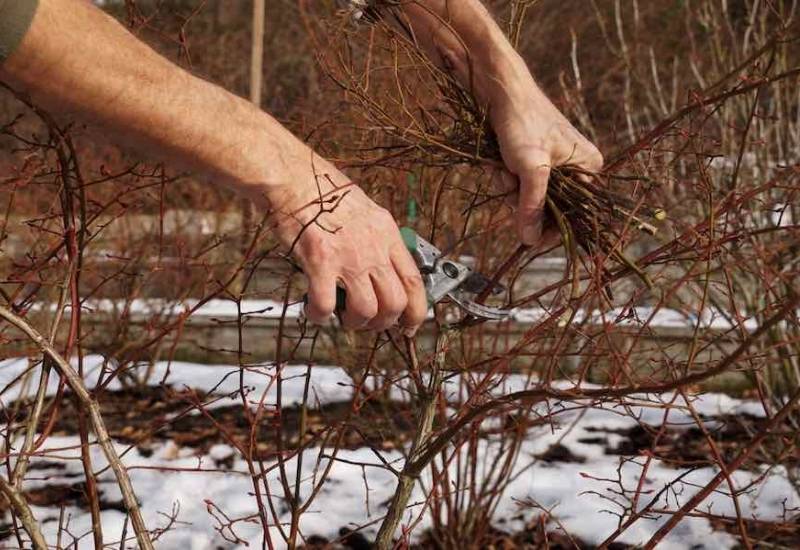
There are several advantages to pruning blueberries. Oftentimes, gardeners do no prune their blueberries because they are growing and producing well so there is no need to interfere.
But an unpruned plant will likely become old and worn out in a few years (see below about regenerative pruning an overgrown blueberry bush).
Pruning, however, is a long-term commitment. While you might not see immediate results, pruning every year will improve the vigour and longevity of your berry bush.
Here are the reasons to prune your blueberries:
Pruning can also help with over-fruiting or biennial bearing. This is when the blueberry will bear lots of berries one year and nothing the following year. Pruning will maintain a balance between bearing wood and new growth.
Understanding How Blueberries Grow
Blueberries are a bush that grows from canes, meaning that multiple stems grow from the root crown to form the bush. New shoots that emerge from the crown are leafy and green but will not generally bear fruit the first year.
Over winter, these young shoots will become woody and turn reddish-brown. They will start bearing fruit in their second year and will generally continue to produce until they are 6 or 7 years old at which point the yield will decline. The best berries usually come from wood that is 2 to 4 years old.
A blueberry cane or branch will produce two types of buds: flower buds and vegetative buds.
As the canes continue to grow, the flower buds are produced further away from the crown every year. The canes can become long and scraggly, and the berries and laterals they produce will become fewer and smaller.
Do Blueberries Need To Be Pruned?

No, your blueberries do not have to be pruned, and you can still have a healthy plant that will produce for years. However, your bush will eventually become overgrown and the yield will ultimately decrease.
What about wild blueberries? Nobody prunes them, so why do I need to prune the blueberry in my garden?
Nature has ways of managing itself. Fire, ravaging herds of grazing animals, and old plants dying out are some of the many ways that Nature “prunes” its blueberries.
Thankfully, this does not happen in our cultivated gardens, so it is up to us to prune our bushes for their health and productivity.
When To Prune Blueberries

Most pruning should be done when the blueberries are fully dormant. In most places, this means pruning sometime between January and early March. Pruning while the bush is dormant causes the least damage to the plant, and the blueberry will be ready to go as soon as spring arrives.
It is best to prune your blueberry every year. However, many gardeners prune every 3 years with great success.
This alleviates the need to set aside time each year for pruning, but it has the disadvantage that it creates an abundance of growth that all ages (and dies) at the same time.
Pruning Highbush Blueberries (how to prune blueberries)
Now that we understand how a blueberry bush grows, we can look at how to prune them to make the most of its natural growth and behaviour.
The First Year

When your first plant your blueberry bush, it may be small during the first winter but it will greatly benefit from a good pruning.
Pruning Mature Bushes

Once your blueberry bush is established, you can start pruning it for a lifetime abundance. Since blueberry bushes can live to be 20 to 30 years old, it is well worth it to take care of them every year.
The big question is which canes do you want to keep? Ideally, you want to have one or two canes from each of the last 6 years or so. This will give you a good balance between new and old growth, and healthy bearing wood that won’t all mature at the same time.
Here is how to prune your blueberry bush each winter to keep it healthy and fruitful:
Removing flowers can also help your bush grow larger, but fewer, berries if that is your desire.
How To Prune An Old And Overgrown Blueberry Bush

Maybe you have missed a few years of pruning, or maybe you have inherited an overgrown blueberry bush. Here is how to rejuvenate the blueberry to thin out the overgrowth and stimulate new canes.
Are each variety pruned the same?
There are several different types of blueberries available: highbush, lowbush, and rabbiteye. All blueberry bushes can be pruned in the manner mentioned above. Here is a little information about each type are some specific pointers for pruning each variety.
1: Pruning Highbush Blueberries

As the name suggests, highbush blueberries grow on tall, upright canes. Unlike lowbush varieties, you should never cut these right to the ground. Instead, they require selective pruning to keep producing large berries for baking or preserving.
Many growers follow a “renewal” system. Once the bush is established, simply cut out the oldest, thickest canes (usually the gray ones) right at the base every winter, along with any weak or crossing branches. Aim to keep a mix of young and old canes. That way, you encourage continuous new growth and ensure a steady, reliable harvest from the same bush each year—no need for separate plots!
2: Pruning Lowbush blueberries
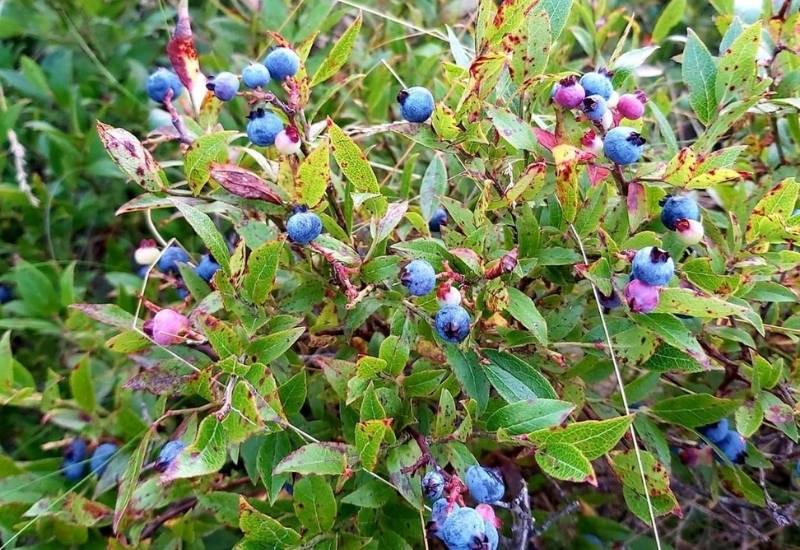
Because lowbush blueberries spread via underground rhizomes, they actually thrive on a radical “total reset” every two years. To keep your harvest juicy and sweet, you have to play the long game. Since these plants only produce on one-year-old wood, the secret is to cut them completely to the ground—either by mowing or even a controlled burn—in late fall or early spring.
This might feel drastic, but it forces the plant to stop wasting energy on old, woody stems and instead push up vigorous new “whips” from the roots. To avoid a year without fruit, simply split your patch into two separate plots. By pruning Plot A on even years and Plot B on odd years, you’ll always have one section in its “crop year,” ensuring a steady supply of wild berries for your kitchen every single summer.
3: Pruning Rabbiteye Blueberries

Rabbiteye blueberries are the heavy hitters of the South, capable of reaching 15 feet if left alone. Unlike the “total reset” of lowbush varieties, pruning here is about managing height and refreshing old wood. Every winter, use the one-in-five rule: cut the oldest, grayest 20% of canes down to the ground. This ensures your entire bush is completely renewed with young, productive wood every five years.
To keep your fruit within arm’s reach, try the summer topping trick. Right after your final harvest, snip the tips of any extra-tall shoots that bolted toward the sky. This stops the vertical climb and forces the plant to branch out horizontally. Those new side-shoots will have all autumn to set flower buds, leading to a much denser, easier-to-pick crop next summer.
Choosing A Pruner
Bypass pruners are the best tool to prune your blueberries. They will cause the least damage to the plant and can be used on any smaller canes that you need to prune. Bypass pruners consist of a sharp blade that slides past a curved metal base.
Make each cut just above a node with the metal base facing the plant. Always make sure that your pruners are clean to avoid spreading diseases, and that they are sharp so they make a clean cut.
For older canes that are thicker and harder, you are better off using loppers or a small saw.
Conclusion
Learning to prune can be a daunting task, especially when the “professionals” make it look so easy. Hopefully, this guide has given you enough tips so you can prune with confidence to produce a healthy blueberry patch that will provide berries for your family for many years.

Written By
Amber Noyes
Amber Noyes was born and raised in a suburban California town, San Mateo. She holds a master’s degree in horticulture from the University of California as well as a BS in Biology from the University of San Francisco. With experience working on an organic farm, water conservation research, farmers’ markets, and plant nursery, she understands what makes plants thrive and how we can better understand the connection between microclimate and plant health. When she’s not on the land, Amber loves informing people of new ideas/things related to gardening, especially organic gardening, houseplants, and growing plants in a small space.