


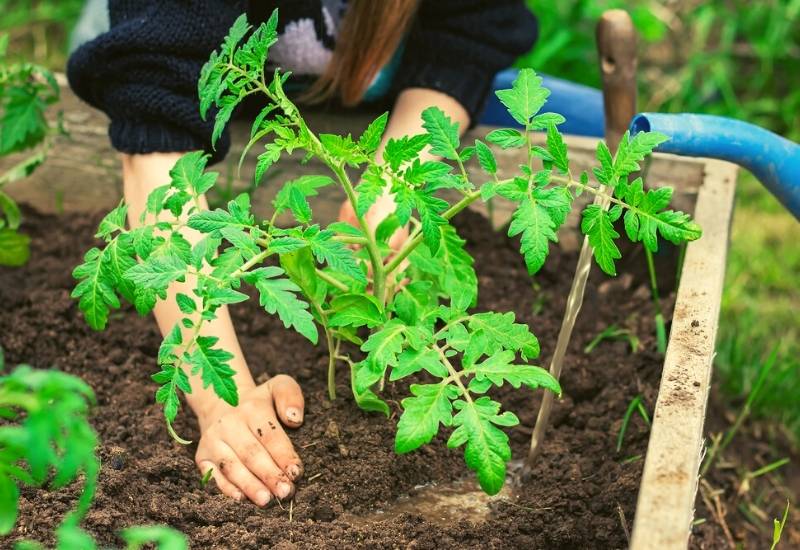
Growing perfect tomatoes starts with good soil. Whether you are growing in containers or the garden, the key to healthy tomato plants that yield juicy, delicious fruits is to prepare the soil appropriately to give your plants exactly what they need.
Tomatoes, like many garden vegetables, do will loam or sandy loam that is fertile and slightly acidic with a pH between 6.2 and 6.8.
Tomatoes are heavy-feeders and do well in soil that is high in nutrients, especially potassium and phosphorus.
Add lots of organic compost or well-rotted animla manure into the top 15cm (6inches) or so of the soil before planting your tomatoes.
Let’s look at the impact soil has on your plants and how to provide the best soil to grow perfect tomatoes.
How to Build the Best Soil For Tomatoes
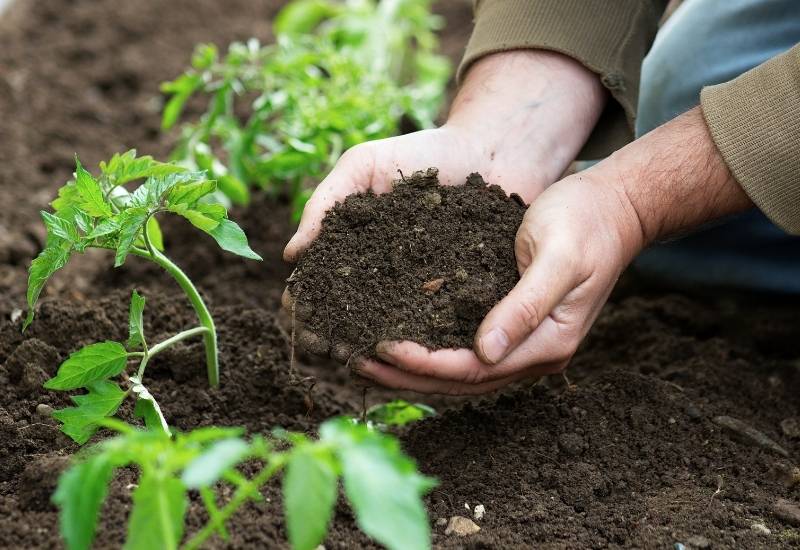
Soil is the foundation of the garden and it is the structure that supports all the vegetables we grow. Soil is made of tiny particles of rock that have been eroded from boulders over millennium and healthy,
living soil is a combination of rock particles, water, air, nutrients, and organic matter. And we can’t forget the millions of organisms that wriggle in each handful of good, living soil.
Tomatoes plants have particular needs, and we can learn how to combine the elements of soil together to create the perfect growing condition for our tomatoes.
1: Soil Texture

The ideal soil texture for growing tomato plants is loose and well-drained. Loam or sandy loam soil is preferred, but tomatoes will grow well in most areas of the garden or in potting mixtures. Avoid heavy clay soils as this will compact the roots and easily become waterlogged.
The best way to improve a soil’s texture is by adding lots of compost, well-rotted compost, or any other organic matter.
Lightly work the soil by tilling or by hand to incorporate organic matter, loosen the soil, and break up any large clods of earth.
2: Soil pH
A soil’s pH is measured on a scale of 0 to 14 and indicates if the soil is acidic or alkaline. Low numbers are acidic and high numbers are alkaline with a 7 being neutral.
The optimum soil pH for tomatoes is slightly acidic between 6.2 and 6.8. If the soil pH is either too high or too low, it can make some nutrients unavailable to your tomato plants, or it can release other nutrients in toxic amounts.
If your soil pH is below 6.2, eggshells can be added at a ration of 0.45kg (1lb) per 9m2 (100 square feet). You can also add limestone, compost, or organic mulches to increase the pH of your soil.
If your soil is too alkaline with a pH above 7, you can add sphanmun peat moss, coffee grounds mixed with water, pine bark, or natural sources of sulfur. Many residential water sources are very alkaline, so be careful when watering your tomatoes with tap water.
3: Soil Drainage

The best soil for tomatoes should retain enough water so the plants stay have moisture available, but should allow excess water to drain away so they do not become water-logged.
If the soil dries out too quickly, the plants run the risk of being stunted and withered, and you will have to water constantly. Overly wet, waterlogged soil impedes root growth with ultimately starves the plant.
Again, soil texture is important since sandy soils drain quickly and dry out, while clay soils easily become waterlogged.
Interesting fact: clay soil will hold 8 times as much water as sandy soil.
If your soil is overly sandy and dries out, try the following to improve water retention:
Clay soils can be loosened for better drainage by:
4: Soil Nutrients – Feeding Your Tomatoes
The water in the soil is laden with nutrients, so as tomato roots absorb water, they are also taking in the food they need to grow. Tomatoes are heavy feeders, meaning they need lots of food to thrive so get your soil tested to ensure it is nutrient-rich.
1: N-P-K
There are many minerals that plants need to grow but the three most commonly added to the garden are nitrogen, phosphorus, and potassium.
These minerals are essential for healthy plant growth, but tomatoes grow best with certain amounts of each.
Consider adding a scoop of organic fertilizer under each tomato plant. Most fertilizers are labelled with three numbers on the bag separated by dashes (such as 4-6-8) which stand for the nitrogen-phosphorus-potassium in the fertilizer.
Find a good organic fertilizer, as chemical-based ones leach toxic chemicals into the soil and ultimately into your food. Some fertilizers are specially formulated for tomatoes and this is a good place to start.
Unfortunately, purchased fertilizers, organic or otherwise, are a quick fix for your tomatoes, and will not add to the long-term health of your garden soil.
2: Compost

Always add lots of compost or well-rotted manure to the soil around your tomato plants. Rich, decomposing organic matter is the best food for your tomatoes and it will continually feed your tomatoes all season long. Compost will also help make the nutrients in the soil more accessible to your tomato plants.
3: Get Your Soil Tested
How do you know if your soil has enough nutrients? You can send a soil sample to a lab and they will test it or you can get a DIY kit to test it at home.
How To Prepare Garden Soil For Tomato Plants

The most natural way to grow tomatoes is to plant them right in the garden and let the earth take care of them. However, there are many things we can do to the soil to help our tomatoes thrive in the garden:
1: Choose A Location
Tomatoes are tropical plants that need lots of sun and heat. Try to choose a location that has:
2: Weeding, Weeding, And More Weeding
Make sure the area is free from weeds, especially invasive grasses that will compete with the tomatoes and choke them out.
3: Work The Soil
Tomatoes grow best in loose, well-worked soil so the roots can grow without hindrance. You can either till the area or work it by hand, depending on your personal preference.
4: Test Your Soil
Now is a good time to test your soil’s pH and nutrient content. Use the information we discussed above to determine what your soil needs to be properly suited to grow tomatoes.
5: Add Amendments
Once you have determined what your soil requires, add the proper amendments and incorporate them into the top layer of soil. Tomatoes will benefit most from these additions when they are mixed in the top 15cm (6 inches) of the soil.
6: More Compost
At this point, you can also top-dress your soil with 2cm to 3cm (1 inch) of compost to add even more food for your ever-hungry tomatoes.
Now your soil will be ready to cultivate healthy tomatoes. You can either direct seed your tomatoes or transplant larger plants depending on your preferences and growing conditions.
The Best Soil For Tomatoes In Containers
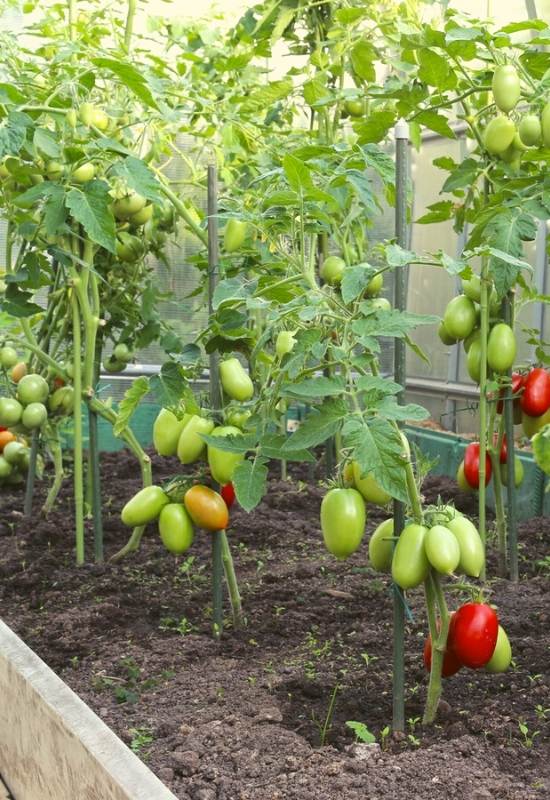
Growing tomatoes in pots gives you great flexibility. We generally have the most success with potted tomatoes as our season is very short and we move them under cover to protect them from early fall frosts.
When growing tomatoes in containers, choose a soilless potting mix, or good quality potting soil.
Be careful of using garden soil as it easily compacts when used in pots. Depending on your soil, it can also dry out quickly, have poor drainage, and can contain weed seeds.
If you so use soil from the garden, add plenty of compost, and compenents such as vermiculite or perlite.
Good potting mixes for tomatoes are made from peat moss or coconut coir for water retention, and perlite or vermiculite that aid aeration and keep the soil from compacting. These mixes will retain moisture without becoming waterlogger and are airy and lightweight.
Here are some important points to consider when growing tomatoes in containers.
1: Pot Size

A 5-gallon pot is generally the smallest container that will accommodate a fully grown tomato plant. And yes, you can grow them in 5-gallon buckets if you want a cheap, readily available option. If possible, go even bigger and get a 10-gallon container.
Remember, the bigger the container means the more compost (i.e. plant food) you can add and the more space the roots will have to grow. If the pot is too small, the roots will become root-bound and the plant will suffer.
2: Soil Depth
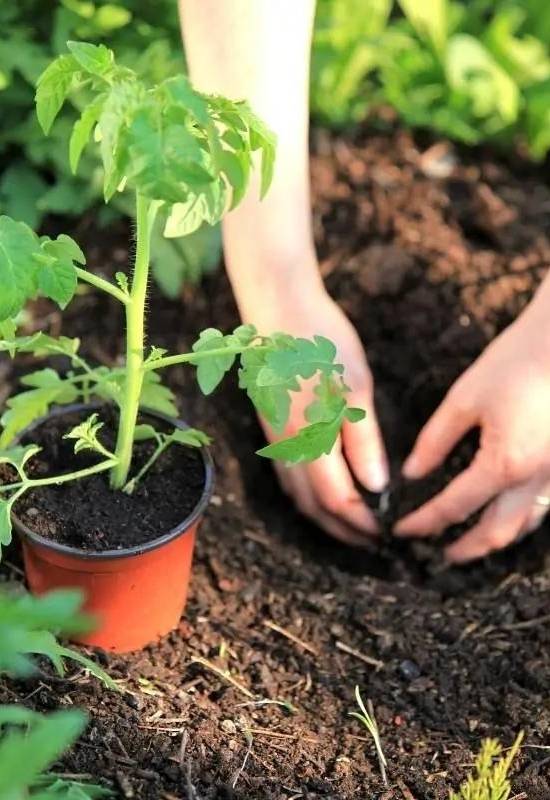
The roots of a tomato plant generally spread out more than down, and the main root base is generally within the top foot of the soil. 20 cm to 25 cm (8-10 inches) is a good soil depth for tomatoes.
3: Feeding Potted Tomatoes

Do not add fertilizer to newly transplanted tomatoes as this can burn or damage the delicate roots. Add fertilizer about 2 weeks after potting the tomato.
At this point, the plant will be established enough to handle it and will benefit from the extra nutrients.
4: Homemade Potting Soil
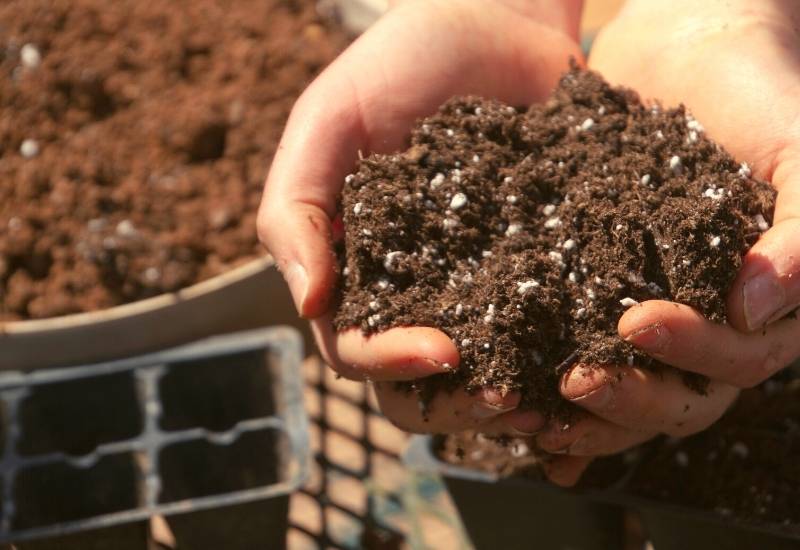
When it comes time to fill your pot with soil, there are many options to running to the store and buying bags of ready-made potting soil. Making your own potting soil has the advantage that you can put in exactly what you want to create the perfect growing environment for your tomatoes.
Here is a good recipe for potting soil you can make at home:
This mix will have good texture for drainage and aeration, a balanaced pH, and lot of organic matter to feed your tomatoes. Potting soil is easy to make:
5: Ready-Made Potting Soil

Growing tomatoes in ready made potting soil has several advantages. It has good drainage, good aeration, and is sterilized so it is free of weed seeds and diseases. Potting soil is usually a mix of peat moss, perlite, vermiculite, and compost.
Here are a few things to look for when choosing a bag of potting soil.
FAQ
1: Can you plant tomatoes in topsoil?
Do not use topsoil in containters or it will compact.
2: Will banana peels help tomato plants grow?
3: What about organge peels?
4: Will bone meal benefit tomato plants?
Conclusion

I think one of the pleasures of gardening is getting your hands dirty. Many gardeners prefer to wear gloves, but I like to stick my hands right in the soil.
There is so much more to soil than just “dirt” and I hope this article has given you a small glimpse into the underground world that feeds our tomatoes and helps us grow the best crops ever. By working with nature, we can create an ideal growing environment for our tomatoes.
Ultimately, our job is to feed the soil and let the earth feed us in return.

Written By
Amber Noyes
Amber Noyes was born and raised in a suburban California town, San Mateo. She holds a master’s degree in horticulture from the University of California as well as a BS in Biology from the University of San Francisco. With experience working on an organic farm, water conservation research, farmers’ markets, and plant nursery, she understands what makes plants thrive and how we can better understand the connection between microclimate and plant health. When she’s not on the land, Amber loves informing people of new ideas/things related to gardening, especially organic gardening, houseplants, and growing plants in a small space.